

Have you ever thought about trading without the fear of losing your money? Paper trading lets you practice in a market that feels real but uses pretend cash. It’s like having a sandbox where you can try out different moves with stocks, options, or crypto while watching market changes unfold in real time.
In this guide, we share easy, risk-free techniques to boost your trading skills and build the confidence you need for the real market.
Understanding What Paper Trading Is and How It Operates
Paper trading lets you practice buying and selling investments using pretend money. It works like a real trading platform, meaning you can place orders and watch market moves without any risk to your cash. Think of it as a rehearsal before you step on stage in the live market. Each order you make with fake money, whether you're buying stocks or selling options, mimics what would happen if you were trading for real. This gives you the chance to try different strategies and get a clear feel for market behavior without any financial risk. For example, setting up your trade in paper trading is just like using a real account, but you’re working with pretend dollars to test your ideas.
Orders are executed based on live market conditions. Prices go up and down just as they do in the real world, and every order follows current market data. This setup gives you a realistic taste of trading without worrying about actual losses.
Both newcomers and experienced traders find paper trading really useful. Beginners can learn the steps of trading and see how orders work without the fear of losing real money. Seasoned traders use it to try out new ideas or fine-tune old strategies without affecting their real accounts. It’s a safe place to build market insights and boost your confidence before jumping into live trading.
- Fake cash amounts (for example, $1M in Webull)
- Orders executed at live prices
- No risk of losing real money
- Ability to reset your account balance
- Access to trade with different types of assets
Paper Trading: Smart Strategies for Risk-Free Wins
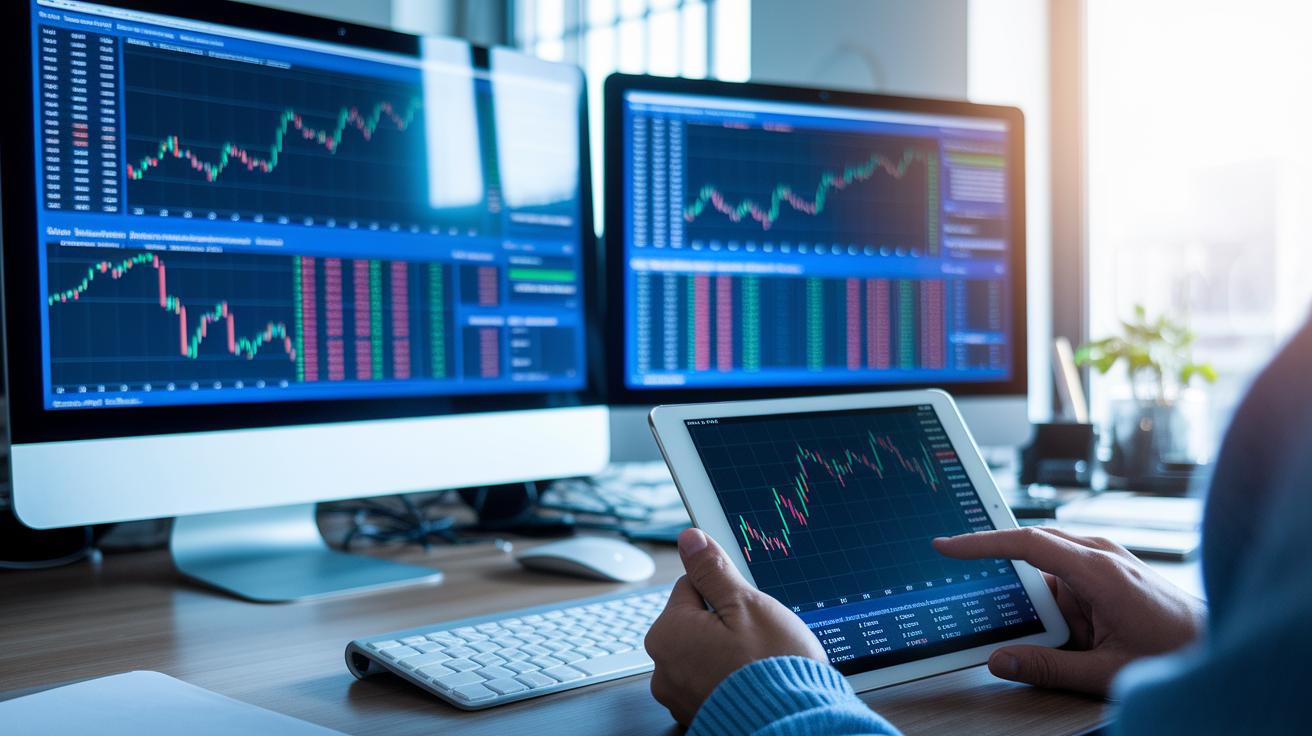
Paper trading is a free way to learn the fundamentals of trading without putting any cash on the line. It lets you practice buying and selling stocks, options, or crypto in a safe environment. You get to experiment with order entries and use market tools until you feel more comfortable before you jump into live trading.
| Benefit | Limitation |
|---|---|
| No financial risk and free account setup | Does not simulate the impact of real money on decision-making |
| Ability to trade diverse asset classes | Misses real-world slippage and commissions |
| Builds platform familiarity and trading confidence | Lacks the emotional connection experienced during live trading |
| Provides a sandbox to test strategies without losses | May foster overconfidence due to the safe practice environment |
While practicing with a simulated account can boost your skill set, it’s important to remember it doesn’t fully capture the emotions and pressures of real trading. Real money brings a different kind of weight to your decisions. Understanding this gap helps you prepare better when you make the transition to live trading, ensuring you’re ready to manage both your strategies and your feelings in the heat of the market.
Step-by-Step Guide to Setting Up a Paper Trading Account
Picking the right platform is the first step on your paper trading journey. Lots of brokers offer free paper trading accounts packed with useful features. For example, Interactive Brokers IBKR Lite offers many different trading options and plenty of demo cash, while Webull gives you endless virtual funds if you reach the $1M level. Moomoo and Charles Schwab also have user-friendly interfaces that make getting started a snap.
Registration and Capital Allocation
To begin, fill out the online registration form and verify your email. Once you’re in, you’ll pick an amount of starting funds, usually somewhere between $100K and $1M. This amount allows you to try different trade sizes and test various risk levels without any real money on the line. The whole setup is made to be easy, even if you’re just starting out.
Navigating the Simulation Interface
Take a few minutes to explore the simulation tools on your chosen platform. Look for the trade ticket where you can enter orders using current market data. Learn the different order types, like market orders (buy or sell immediately at current prices) and limit orders (set a specific price for buying or selling). Also, check your Open Positions regularly to see how your simulated trades are doing. This setup mirrors real trading, so it helps you get a feel for actual market movements.
| Step | Action |
|---|---|
| 1 | Select a broker and create your free paper trading account. |
| 2 | Complete the online registration and verify your email. |
| 3 | Choose a starting fund amount that meets your testing needs. |
| 4 | Get familiar with the trade ticket and the different order types. |
| 5 | Keep an eye on your open positions to see your simulated performance. |
Comparing Top Paper Trading Platforms

When picking a paper trading simulator, it's smart to check a few main points first. Think about how simple the setup is, what kinds of assets you can trade, and how much virtual money you get to start with. These bits really help you practice real trades and test out different strategies. For example, if one simulator offers strong charting tools or a smooth mobile experience, you might find it suits you better than one with fewer features.
| Platform | Starting Virtual Capital | Supported Assets | Distinctive Feature |
|---|---|---|---|
| IBKR Lite | $1M | Wide variety including stocks, options, and more | Diverse asset classes and strong simulation tools |
| Webull | Unlimited (beyond $1M) | Stocks, options, ETFs, etc. | Abundant virtual funds for high-volume practice |
| Moomoo | Standard demo allocation | Multiple asset classes | User-friendly mobile and desktop interface |
| Charles Schwab | Demo funds provided | Focus on stocks and mutual funds | Strong charting tools on a traditional platform |
Matching the right platform with your trading style is key to building confidence. If you like a snappy mobile experience and easy browsing, a simulator like Moomoo might be your best bet. On the other hand, if you want a broad selection of assets with detailed simulation tools, IBKR Lite offers a fuller range. Webull is a good pick for flexible virtual funds, while Charles Schwab shines if you value in-depth charting. In short, choose the simulator that fits your practice needs and trading goals for the best overall experience.
Paper Trading: Smart Strategies for Risk-Free Wins
When you set up paper trading, start with clear goals. First, decide on the profit you want and also the biggest loss you can handle before you stop a trade. This helps you know when your plan is working or needs a little tweak. For example, you might aim for a 10% profit on a trade but plan to review your strategy if you lose 5% at any point.
Backtesting Strategies
Next, try your ideas using old market data. Run automated tests to see how your strategy might have fared during different market conditions. It’s like testing a recipe before a big dinner. Write down every outcome so you can spot steady patterns or problems. Using chart tests, similar to those in technical analysis, lets you picture the best moments to buy and sell, just like a seasoned trader would.
Performance Analysis
After testing, take a close look at how your strategy performed by checking key numbers like the win rate and average profit per trade. This review shows you where your strategy works well and where it might need some fine-tuning. Watching these numbers over many simulated trades gives you a clearer picture of how effective your strategy is and helps you adjust it for real market conditions.
- Win rate per trade
- Risk-reward ratio
- Maximum drawdown
- Average profit per trade
- Cumulative return
- Trade frequency
From Paper Trading to Live Markets: Best Practices

Switching from a paper trading account to one with real money can be tougher than it seems. Many traders find that trading with fake money doesn’t really get you ready for the nerves that come with risking your own cash. This difference might lead you to overtrade or ignore real costs like slippage (the gap between the expected price and the actual price) and commissions.
Here’s a simple guide to ease into live trading:
- Begin with a smaller position.
- Factor in costs like slippage and commissions.
- Update your risk management rules.
- Watch your emotional responses.
- Regularly review and tweak your strategy based on real market data.
Transitioning to live trading takes time and plenty of trial and error. Remember, the confidence you build in paper trading doesn’t automatically carry over to live markets, where both the stakes and the emotions are real. So, take your time, learn from each experience, and gradually build a strategy that works in the real world.
Advanced Paper Trading Techniques and Pitfall Avoidance
If you're ready to take your trading skills further, paper trading lets you try out your ideas without risking real money. You get to practice with trades in different markets, like options spreads, forex, and futures, using real-time data. Think of it as a simulation where every move feels like you're managing a real portfolio.
This approach mirrors actual market ups and downs, so you can learn when to make a move and how to manage risks. Imagine testing different options strategies while watching how forex pairs shift, all at once. It’s a fun way to dust off your strategy-building skills before you go live.
Some platforms even offer easy-to-use chart tools, like TradingView charts, to spot trends as they happen. But keep in mind, even in these practice setups, small delays or differences in order timing can change your results compared to actual trading.
Here are some key tips to keep in mind when paper trading:
- Use real-time data feeds.
- Incorporate commission modeling.
- Test across varied market conditions.
- Avoid curve-fitting parameters.
- Record sessions for post-trade analysis.
Final Words
In the action of exploring paper trading, this article broke down its core mechanics, real market simulations, and setup process. We compared top virtual platforms, weighed benefits versus limitations, and tested risk-free strategies. The guide also examined transitioning from simulated to live trading while covering advanced techniques for deeper market analysis.
Taking these insights into account can refine your practice, boost confidence when discussing market trends, and help you master paper trading for a more informed investment experience.
FAQ
Q: What is meant by paper trading?
A: Paper trading means using a simulated trading environment where you can buy and sell with fake money. It mirrors real market conditions without risking real funds.
Q: What is a paper trading app or simulator?
A: A paper trading app or simulator means a digital tool that allows you to execute trades virtually. It uses live data and virtual cash so you can experiment and learn without financial risk.
Q: How does paper trading work on platforms like TradingView, Webull, and Etrade?
A: Paper trading on these platforms means you can practice trades using live market prices without using real money. Each offers its own features to help you test strategies in a realistic setting.
Q: Are there free paper trading accounts or apps?
A: Free paper trading accounts mean you can access a simulated trading environment at no cost. Many brokers and platforms offer these accounts to let you practice trading without financial exposure.
Q: How does paper trading extend to Forex and futures?
A: Paper trading in Forex and futures means you can simulate trading different asset classes using real-time market data. It lets you test strategies and learn pricing dynamics safely on both markets.
Q: Can paper trading help beginners?
A: Paper trading helps beginners by providing a no-risk setting to learn market operations and order placements. It builds trading skills and confidence before using real money.
Q: Is day trading profitable: Can you make $1000 or $200 a day, or is $100 enough?
A: Day trading profitability means results vary widely; while paper trading can help test strategies, making $1000 or $200 daily isn’t guaranteed, and starting with $100 may limit potential gains.
Q: How does NASDAQ paper trading function?
A: NASDAQ paper trading means simulating trades based on NASDAQ market data. It lets you practice buying and selling stocks from one of the world’s most active markets without real-world risk.
Q: What insights can you find on paper trading discussions on Reddit?
A: Paper trading discussions on Reddit mean traders share personal experiences and practical tips. They provide firsthand insights, helping others learn effective strategies and common pitfalls to avoid.
