

Have you ever noticed how some numbers seem to appear almost magically on market charts? Fibonacci trading uses ratios like 23.6%, 38.2%, and 61.8% (these are handy numbers that help you know when prices might change direction).
Imagine a surfer spotting the perfect wave. These levels work in a similar way for traders, guiding them through a busy market.
This post will show you how Fibonacci signals can lead to smarter trading decisions and explain why these numbers offer real insights into market trends.
Fibonacci Trading: Smart Signals for Market Success
Fibonacci trading relies on a few key numbers, 23.6%, 38.2%, and 61.8%, to guide traders. Think of these numbers as helpful signposts that show where prices might slow down or even turn around. Imagine a trader spotting the price bouncing at the 38.2% level, much like a surfer catching just the right wave.
Instead of pinning down a single line, Fibonacci retracement levels act more like zones. Even if prices don't land exactly on these numbers, repeated bounces at a particular zone (often called "snaps") hint that something important is happening there. Traders keep a close eye on these zones for chances to jump back into the market when it recovers, seeing them as temporary supports or hurdles.
Beyond retracements, traders also use extension ratios like 138.2% and 161.8% to decide on take-profit targets. These numbers offer clues about where prices might head once the trend pushes past its usual range. For example, a trader might plan to exit at the 161.8% mark to maximize gains, sort of like knowing when to get off a speeding roller coaster.
Risk control is a crucial part of the game. Many traders protect themselves by placing stop-loss orders just beyond an important Fibonacci level. If you're buying at the 38.2% retracement, you might set a stop-loss just below the 23.6% level to shield against sudden drops. And remember, smart traders mix Fibonacci insights with other analysis and back their methods by checking past market data, like the analysis found at https://cleverbusinessnews.com?p=4755.
Step-by-Step Retracement Drawing with Fibonacci Tools
-
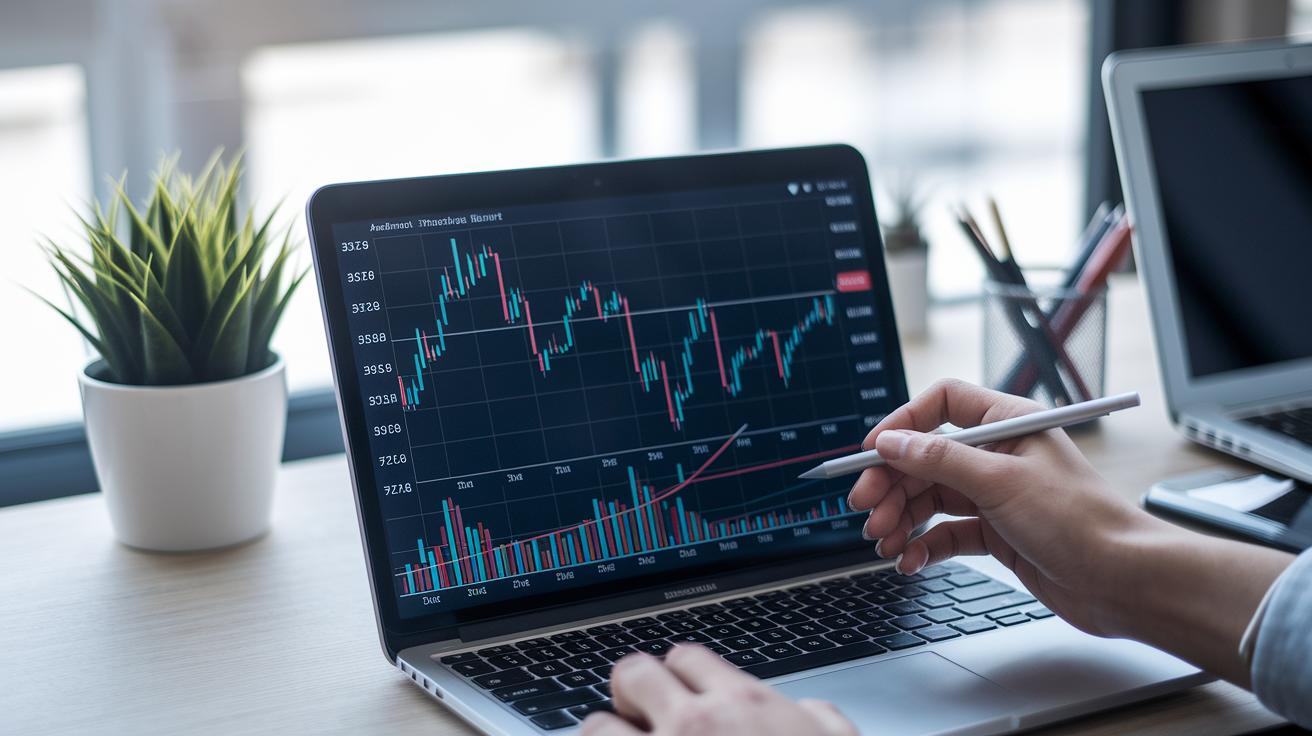
Begin by spotting a clear A-to-B move on your trading chart. Think of it like drawing a straight line between two dots, you’re simply connecting the points.
-
Next, grab your Fibonacci tool and draw a line from the swing high to the swing low, or the other way around. These two spots are your anchors for setting the retracement levels.
-
As soon as you set your anchors, you'll see common levels pop up, 23.6%, 38.2%, 50%, 61.8%, and 78.6%. These percentages mark areas where the price might reverse or bounce back. Imagine it like noticing that your friend always stops to tie their shoes at the same spot every time.
-
Keep an eye out for a price that bounces or snaps off the same level several times. That repeated action is a sign that the area is important for support or resistance on the chart.
-
Finally, play around a bit with the drawing until those Fibonacci levels line up perfectly with the chart's price moves. If you want to double-check your setup, take a look at a trading chart like this: https://cleverbusinessnews.com?p=4870.
Using Fibonacci Extensions and Projections for Price Objectives
Fibonacci extensions help you see how far prices might move beyond their current trend. Think of them as a handy guide that highlights potential exit points. When you mix in typical ratios like 138.2% and 161.8%, you get clear targets for taking profits. Sometimes, levels such as 200% or 261.8% show where prices could head during strong trends.
Picture marking the highest and lowest points of a swing in the market. After these are set, the Fibonacci extension tool sketches out future price levels. This creates zones where the price might either ride up against resistance or find support. It’s a bit like tossing a ball at a wall, the rebound gives you a peek at how high it might go.
For example, imagine watching a stock surge. A trader might draw an extension from the start of the move to its peak and notice that the price is nearing the 161.8% mark, a popular target for profit-taking.
Use these projected levels as the final touch in your trading plan. They work best when paired with retracements so that your overall strategy covers every angle. With Fibonacci extensions, you can adjust your plan as prices shift, ensuring your strategy stays in tune with the market’s flow.
Confluence of Fibonacci Trading with Technical Indicators

Combining Fibonacci levels with popular trading tools can sharpen your trading decisions. Visualize Fibonacci levels alongside indicators like RSI, MACD, and stochastic oscillators, with each tool adding a piece to the overall puzzle. When these levels line up with trendlines, pivot points, or moving averages, they provide a clearer signal on when to enter or exit a trade. It’s like noticing two separate hints that both point to the same area, giving you a boost of confidence.
For instance, if you see the price bounce at a Fibonacci level exactly when a moving average crossover happens, you’ve got double confirmation. Think of it as drawing a line between two key price points and then watching the chart; the relative strength indicator (which measures how fast prices are changing) confirms that area as support. This combined check helps cut down on false signals that might pop up when using just one tool.
Many traders use this approach to spot high-probability trade setups. By matching Fibonacci data with oscillators, you build a layered strategy that cuts through the market noise. This blend not only minimizes risk but also highlights strong areas for re-entering a trade or taking profits. Try mixing these techniques, and you might find that clear and reliable signals naturally emerge.
Adapting Fibonacci Trading Strategies for Forex, Stocks, and Crypto Markets
Fibonacci trading tools can help you in any market. Whether you're working with forex, stocks, or crypto, methods like retracement, extension, time zones, and speed resistance offer clear clues. For example, in forex the key Fibonacci points often show high trading activity on even short-term charts like those spanning 5 minutes to an hour. This busy activity makes it easier to notice when prices might turn, a real boost in fast-moving currency pairs.
When it comes to stocks, you typically need a wider view. Swing traders generally lean on daily or weekly charts, especially around big events such as earnings announcements or important reports. Here, Fibonacci levels mix well with regular analysis to highlight areas of support or resistance. Think of it like having a map that spots caution zones just before a major earnings call.
Crypto markets can be a bit more challenging because of their big price swings and extra volatility. In these cases, you can adjust Fibonacci techniques to cover larger moves with more flexible retracement zones. This lets you better handle the unpredictable behavior often seen in digital currencies. Try out different chart timeframes and blend Fibonacci insights with other methods to build a strategy that really fits your market.
Integrating Automated and Manual Fibonacci Tools in Trading Platforms

Many trading platforms come with built-in Fibonacci tools that automatically draw levels on your charts quickly. These levels update in real time as the market moves, so you get immediate alerts when prices hit important ratios. For example, you might see a Fibonacci line shift mid-trade, which can remind you to tighten your risk controls.
At times, it’s important to calculate Fibonacci levels by hand, especially when the market behaves in unexpected ways. When price movements don't follow the usual patterns, drawing your own lines using custom starting points can give you a clearer picture. It’s a bit like adjusting a recipe, you tweak the Fibonacci levels to match an unusual trend, making sure your analysis stays on point.
Some trading platforms blend both methods, letting you view automatic drawings side by side with your manual adjustments. This setup gives you the flexibility to double-check signals while adding your personal touch. In practice, you might use the built-in calculator for quick updates and then refine the levels yourself if the market seems off. This two-pronged approach helps you effectively track key support and resistance areas.
Managing Risks and Recognizing Limitations of Fibonacci Trading
Remember, Fibonacci retracement isn’t a magic formula. The lines you draw come from your own judgment, which means they can sometimes lead you astray. Prices can push past these usual levels, so having strong risk management tactics is key. For instance, you might set stop-loss orders just past the next Fibonacci level to help protect your trade from sudden moves.
It’s a smart move to risk only a small amount on each trade while checking the Fibonacci signals with other market indicators. This extra step builds a sturdier plan for managing risk. Taking time to review your trades and mix in other analysis tools can really help you understand how prices are moving.
Keep in mind that Fibonacci methods can change with different time frames, which is why it’s important to double-check what you see. Think of Fibonacci levels as rough zones instead of guaranteed reversal points. With this balanced approach, you build a strategy that handles risk well and adjusts to the ups and downs of the market.
Backtesting Fibonacci Trading Models for Strategy Validation

Traders often turn to past market data to see if their Fibonacci strategies are on track. They look at simple figures like win rate, risk-reward ratio (how much you gain versus how much you might lose), and drawdown (how much your account dips during a losing streak). Imagine a trader reviewing ten years of data to check if buying and selling based on Fibonacci levels really brings in steady gains.
Some traders even let automated scripts handle the work. These scripts jump in and make trades when prices hit Fibonacci levels, recording key stats along the way. For example, one trader automated entries at the 61.8% retracement level and noted a 65% win rate, which clearly shows that level can be a smart spot to trade. This kind of information makes it easier to see patterns and tweak strategies as needed.
A clear backtesting process might look like this:
- Collect all the historical data you can find
- Run simulations with a platform’s strategy tester
- Compare different performance numbers under various market conditions
By following these steps, traders can pick the Fibonacci method that matches their personal risk tolerance and style. Repeating these tests helps turn tricky market behavior into manageable, repeatable steps that lead to better trading decisions.
Final Words
In the action, we explored practical strategies using Fibonacci trading methods to mark entry and exit levels, drawing clear retracements, utilizing extensions for price targets, and merging these with other technical tools. We also looked at custom approaches across different markets, understood the need for risk management, and stressed backtesting for refining strategies.
These practical steps help build your confidence and mastery of market trends. Stay curious and keep refining your strategy for more precise and positive market moves.
FAQ
Q: What is the Fibonacci Trading book?
A: The Fibonacci Trading book explains how traders use specific number sequences to spot market turning points. It guides readers through key techniques and basic ideas for practical trading.
Q: What are Fibonacci retracement levels and how are they used in intraday trading?
A: Fibonacci retracement levels mark potential support and resistance zones, often seen at 23.6%, 38.2%, and 61.8%. Traders use these levels for quick re-entry and exit signals during intraday trading.
Q: What is a Fibonacci trading strategy and how does it work?
A: A Fibonacci trading strategy uses set ratio levels to plan when to enter and exit trades. It combines retracement and extension levels to estimate price movements and improve timing.
Q: Is there a Fibonacci trading strategy PDF available?
A: Fibonacci trading strategy PDFs are guides that break down the steps of applying these techniques. They offer clear instructions and examples for setting entries, exits, and managing trade risks.
Q: How can beginners start trading using Fibonacci methods?
A: Fibonacci trading for beginners starts with learning to draw retracement levels on charts. By practicing and combining them with other signals, new traders better identify entry and exit opportunities.
Q: Is there a reliable Fibonacci trading App?
A: A Fibonacci trading app provides automated drawing tools and live alerts at key levels. This makes it easier for traders to monitor opportunities while staying focused on their trade plans.
Q: What are Fibonacci extension levels and how are they used?
A: Fibonacci extension levels project future price targets beyond the original swing. Traders use ratios like 138.2% and 161.8% to set profit targets and manage exits effectively.
Q: Is Fibonacci effective for overall trading and day trading?
A: Fibonacci can be effective for both overall market analysis and day trading. When paired with other technical tools, these levels help improve signal reliability and trade decision-making.
Q: How does one trade with Fibonacci techniques?
A: Trading with Fibonacci involves identifying notable price swings, drawing retracement and extension levels, and using these markers to set entry, exit, and risk management guidelines.
