

Ever wondered how lightning-fast computers could change the way we trade? High frequency trading uses speedy machines and smart programs to grab tiny price differences in just microseconds. It works like a well-timed system that makes the market run more smoothly and efficiently.
In this blog, we'll take a close look at high frequency trading. You'll see how these quick tools give traders a smart edge. We'll cover the basics, explain the importance of speed, and show why even a fraction of a second can make all the difference.
Core Principles of High Frequency Trading Fundamentals
High frequency trading uses very fast computers and smart algorithms to trade millions of orders almost instantaneously. It works by spotting tiny price differences and quickly buying and selling to take advantage of them. This rapid method helps narrow the gap between the buying and selling prices, which boosts market efficiency and liquidity.
At its heart, high frequency trading is about making decisions in a flash. Firms use clever techniques like algorithmic trading, which means letting computers automatically follow trading rules, to act on market data in just microseconds. They depend on high-speed data feeds and precise computing to stay ahead of competitors in a very competitive space.
Here are the basics:
- Orders are executed in fractions of a second.
- Algorithms make trading decisions automatically.
- Techniques like statistical arbitrage (using data patterns for profit) and market-making are key.
- Servers are placed near exchange centers to cut down on communication lag.
- This helps tighten the difference between bid and ask prices.
Many firms keep their servers close to exchange data centers to drastically reduce delays. This close setup means their trading signals are processed at lightning speed. They also use smart statistical models to spot small market flaws that only show up for a split second, giving them a valuable edge in pricing and liquidity.
Beyond just speed, these methods help shape today’s markets. By constantly watching and reacting to price movements, high frequency trading supports steadier price changes and strengthens the order books. In short, these techniques show how tech and trading work hand in hand, benefiting both big institutions and everyday traders.
Historical Evolution and Growth of High Frequency Trading

High frequency trading really started to take shape in the early 2000s when electronic trading replaced the traditional floor setups. Back then, technology began to lead the way, speeding up the process of buying and selling stocks. As the noisy pits made way for digital exchanges, firms shifted to computer systems that could make quick decisions, a move that made trading faster and more efficient.
By 2008, high frequency trading was a big part of the US stock market, handling about half of all trades. In 2009, it even reached around 60%. This boom came from the ability to send orders in mere microseconds (millionths of a second) and the use of smart computer programs that caught brief market chances. But here’s something to note: even though trading volume was climbing, earnings slumped from roughly $7.2 billion in 2009 to under $1 billion by 2017 due to rising data costs and stricter rules.
Since those early days, the high frequency trading scene has slowly consolidated among a few key players. Tightened regulations and higher operating expenses have pushed several firms to merge or cut back, reshaping the competitive landscape. It’s a clear example of how fast-moving technology and tougher oversight have worked together to change the way markets operate.
High Frequency Trading: Smart Market Edge
High-frequency trading firms know that every microsecond matters. They invest in top-notch, low delay networks, using both microwave and fiber-optic systems to cut down delays when sending orders. Their servers sit close to the exchange centers so they can process live data almost instantly and finish trades in less than 100 microseconds.
These firms rely on a mix of powerful hardware and smart software to get the job done. They use custom devices like FPGAs for early trade filtering and harness GPUs for fast data analysis, which helps their algorithms respond swiftly. Key parts of their systems are built in C++ to speed up processing in high-performance clusters. This careful blend of tech makes sure they can seize every split-second opportunity. Ultra-fast networks speed up order delivery, and advanced routing methods minimize the time it takes for data to travel, ensuring even the briefest chance is captured.
All these measures give high-frequency traders a big advantage over traditional systems, enabling them to handle fast market movements and large volumes. They are always fine-tuning their networks and computing technology to stay ahead, and that smart market edge makes a real difference when the market shifts quickly.
Networking & Latency Reduction Techniques
Microwave links are chosen for their very short transmission times and work side by side with fiber-optic cables that provide reliable long-distance connections. These systems use smart routing options that shorten the time it takes for data to travel from an exchange to a trading engine.
Hardware & Software Optimization
FPGAs are used to quickly filter trades before they happen, while GPUs handle complex calculations at impressive speeds. The trading engine’s core is built with critical components in C++, helping it make decisions within split seconds.
Strategic Algorithms and Models in High Frequency Trading
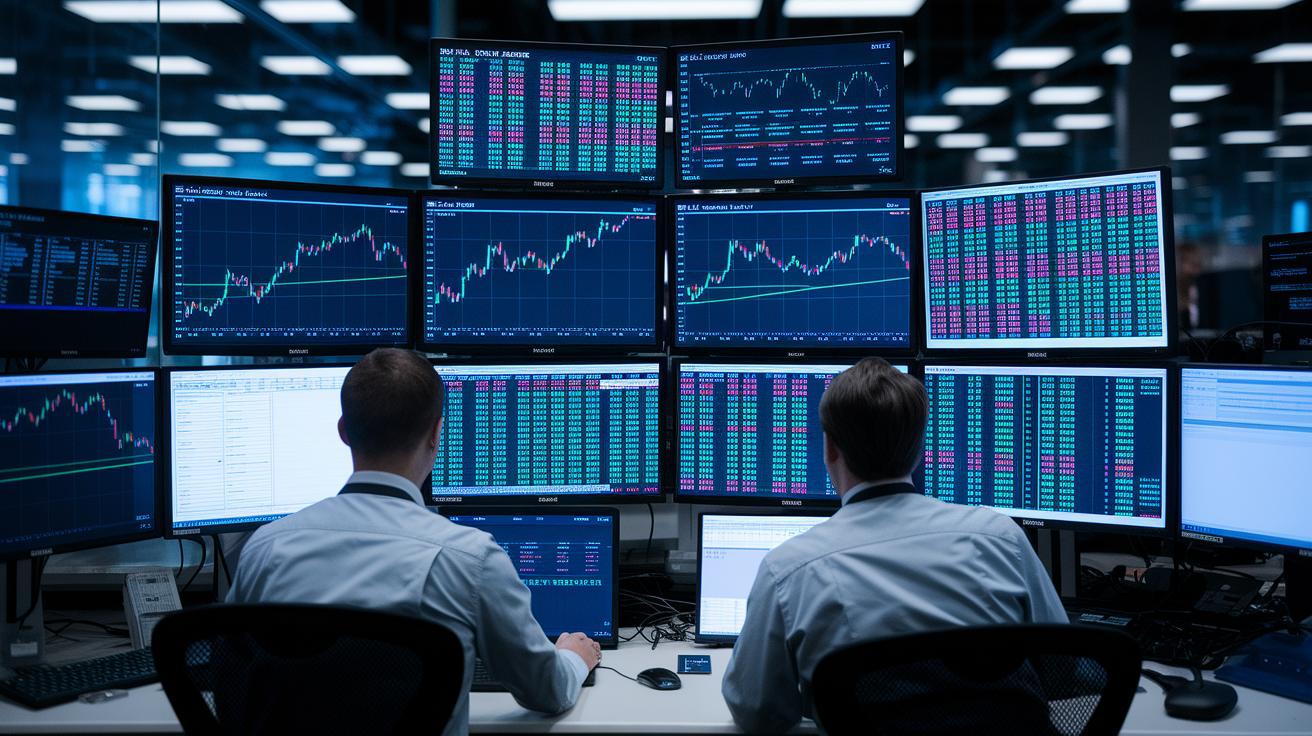
High frequency trading relies on smart, data-based algorithms that grab quick chances in rapidly changing markets. Firms build models that use simple math to study how prices move, notice shifts in available buyers and sellers (liquidity means how easily you can buy or sell something), and make trades before conditions change. These systems mix strategies that continuously update prices with fast signals coming from live data feeds. Traders design their models to act on tiny price changes and use backtesting, running their ideas against past market data, to check if they work well. This careful method helps lower risks while making sure trades go off smoothly, even after moments when the market showed weaknesses. Every part of the process is tested and tweaked so that the system stays strong under tough conditions and keeps giving solid trading signals.
Statistical Arbitrage Techniques
Statistical arbitrage means looking at past price patterns to notice when an asset's price strays from what’s normal. Think of it like spotting a moment when a scale is uneven and quickly fixing it. This idea helps traders make money from small shifts as prices drift back to where they usually are. It’s all about catching those brief imbalances and taking advantage of them.
Market Making Models
Market making involves always setting competitive prices to buy (bids) and sell (asks) so that traders earn a small profit from the difference. These models keep an eye on the order books in real time and adjust prices as conditions shift. They also benefit from small rebate incentives that many exchanges offer. Essentially, these systems help keep the market moving smoothly while generating regular, modest profits from many quick trades.
Signal Generation and Backtesting
Signal generation is the part where systems sift through huge amounts of live data to spot the best moments to trade. Once a good opportunity shows up, a trade is triggered almost instantly. Backtesting means firms run their trading ideas on historical data to see if they’d have worked in the past. This mix of live data analysis and testing against real history builds a tough system that’s ready to act fast and trade reliably, even when the market gets unpredictable.
Market Impact, Benefits, and Risks of High Frequency Trading
High frequency trading, or HFT, is a way to buy and sell stocks very quickly. This rapid trading helps create more trading activity, making it easier for everyone to buy or sell shares when needed. It narrows the gap between what buyers are willing to pay and what sellers ask, which is known as tightening bid-ask spreads. For example, since 2008, HFT has handled over half of US stock trades, helping to make the market work more smoothly. But this fast pace can also cause sudden price swings, like what happened during the flash crash in 2010. While HFT can cut down on costs for big companies, its speed may sometimes lead to instability if the market shifts unexpectedly.
Using HFT also brings other changes. One big change is the rise of dark pools, private trading platforms where large trades happen out of public view. This means that smaller investors might not always see the full picture. And because HFT relies on quick computer decisions and huge volumes of orders, both regulators (the people who set market rules) and market players need to keep a close eye on its benefits and risks. It’s all about finding the right balance between better trading ease and keeping prices from jumping around too much.
| Aspect | Description |
|---|---|
| Liquidity Enhancement | HFT boosts the number of trades, making it easier to buy or sell shares. |
| Volatility Risks | Very fast trading can sometimes cause quick price changes during market stress. |
| Price Discovery | Quick data processing helps set more accurate share prices. |
| Dark Pool Effects | Large trades take place in private platforms, which can reduce clarity for smaller investors. |
| Transaction Costs | HFT can lower overall trading costs, though it often comes with high tech expenses. |
| Market Stability | Balancing more trades with risks of sudden moves is key to a stable market. |
Regulatory Compliance and Oversight in High Frequency Trading
Regulations like Reg NMS were made to keep trading fair, but in many cases they seem to help big firms that can afford fast trading systems. Rules set up to protect everyone sometimes end up giving a boost to those with the newest technology, leaving many to wonder if these measures are really keeping the field level.
Regulators now lean on special surveillance tools that can track trades in tiny fractions of a second. These tools work nonstop to watch over automated trading and quickly spot anything odd. It’s like having a vigilant guard who never sleeps, always ready to catch any unusual market moves right when they happen.
At the same time, tougher capital and reporting rules have changed the industry landscape. Big names like Citadel, Virtu, and Flow Traders are now more dominant because only companies with deep pockets can manage high-speed trading. As a result, sticking to these strict rules has become crucial for any firm that wants to stay profitable and competitive in today’s fast-paced market.
Final Words
In the action, our discussion moved from the core aspects of high frequency trading fundamentals, rapid order processing, smart algorithms, and cutting-edge infrastructure, to examining its market impact and regulatory oversight. We saw how systems work to narrow spreads and manage risks, while strategies continue to evolve in fast-moving financial markets. This clear breakdown offers practical insights and builds confidence in making informed investment choices. Embracing these ideas can foster a smoother, more efficient approach to financial management and high frequency trading success.
FAQ
Where can I find high-frequency trading books or PDFs?
High-frequency trading books and PDFs offer clear explanations of HFT fundamentals, technological evolution, and strategy details. They serve as handy resources for anyone looking to grasp key concepts in automated trading.
How is high-frequency trading discussed on Reddit?
High-frequency trading topics on Reddit involve community debates on strategy, technology updates, and market impact. Members share insights and personal experiences, making it a helpful space for both beginners and experienced traders.
What are high-frequency trading software, apps, and bots?
High-frequency trading software, apps, and bots are specialized programs that execute trades in microseconds. They use advanced algorithms to analyze markets and quickly capture small price differences for potential profits.
Who are considered high-frequency trading firms?
High-frequency trading firms are companies that invest in state-of-the-art technology to execute a large volume of trades rapidly. They focus on market-making, statistical arbitrage, and liquidity detection to take advantage of brief market inefficiencies.
What is a high-frequency trading strategy?
A high-frequency trading strategy employs automated algorithms that quickly exploit small price differences. These strategies rely on speed and volume, using techniques like market making and statistical arbitrage to generate short-term profits.
Is high-frequency trading illegal?
High-frequency trading is legal and regulated. Firms following strict market rules and risk controls operate within legal guidelines set by regulatory bodies, ensuring that their high-speed activities are conducted fairly.
What does high-frequency trading mean and what are some examples?
High-frequency trading means using automated systems to execute trades in microseconds. Common examples include market-making and statistical arbitrage, where algorithms exploit slight price discrepancies in rapid trade sequences.
Is JP Morgan considered a high-frequency trading firm?
JP Morgan is primarily a traditional bank that also utilizes algorithmic trading for rapid execution. While they engage in fast, automated trades, they are not exclusively classified as a high-frequency trading firm.
