
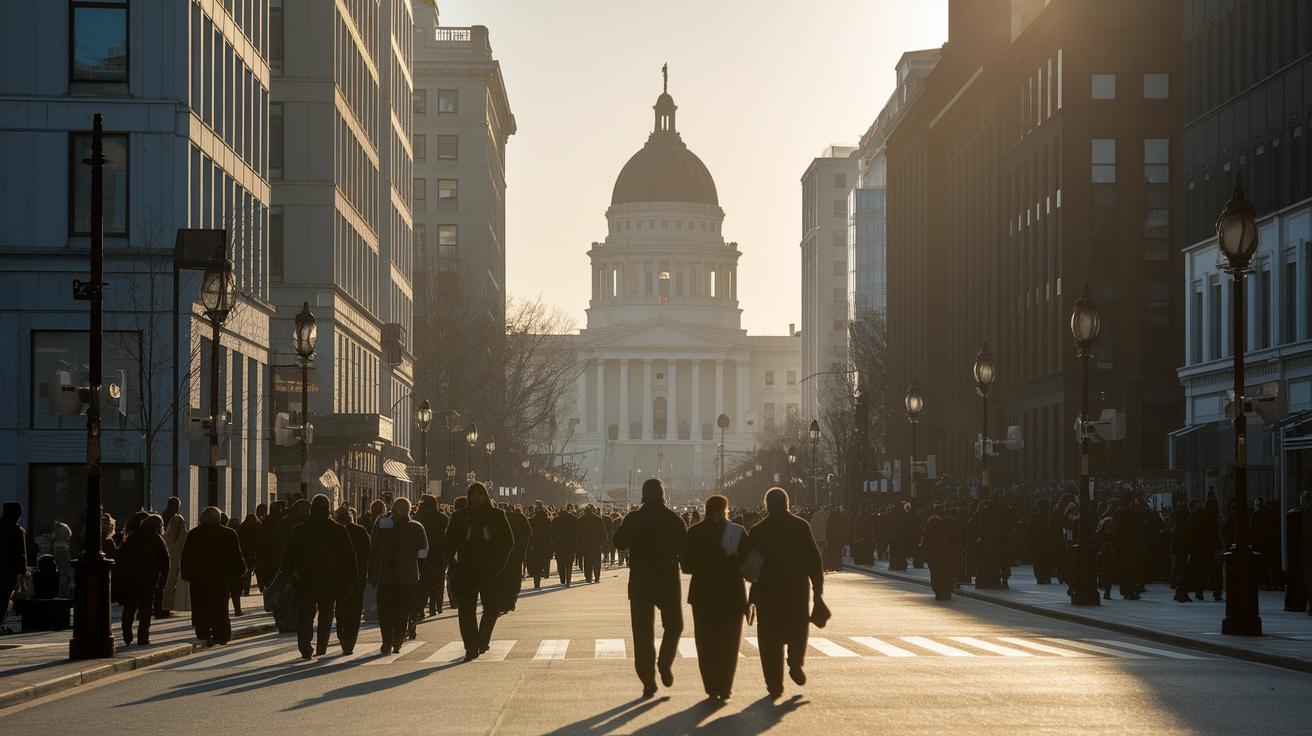
What if a brave move could change deep despair into new opportunities?
Back in the early 1930s, banks were closing their doors and families were struggling to make ends meet. President Roosevelt stepped in with recovery programs that provided quick help, boosted production, and reformed banking practices. These changes restored trust in the system and gave hope to a nation that was hurting.
This story shows that bold, decisive action can spark lasting progress. It reminds us that even in the toughest times, smart moves can help turn challenges into chances to rebuild and grow.
How New Deal Recovery Programs Revived the American Economy
In the early 1930s, banks were closing, and many people lost their jobs while the country’s output fell sharply. In 1932–33, everyday families saw local banks go under and felt the shock of sudden financial hardship. Imagine your neighborhood bank, trusted for years, shutting its doors overnight, leaving everyone scrambling for stability. This crisis broke the trust people had in banks and made communities feel very vulnerable, with small businesses shuttering and families worrying about paying for the basics.
During these tough times, President Roosevelt introduced the New Deal recovery programs as a lifeline. In his first 100 days, his administration pushed through a wave of important laws and created new federal agencies. This bold plan did more than just offer immediate help, it set the stage for a stronger, more sustainable future. It also redefined what the government could do, quickly restoring confidence and sparking progress in a nation in need.
These programs had three main parts:
• Relief: fast support for those who lost their jobs and homes.
• Recovery: actions to boost production in factories and farms.
• Reform: lasting rules to keep banks and workplaces stable.
Together, these steps reshaped the role of the federal government, jump-starting the economy and laying down a roadmap for handling future financial crises.
First New Deal Initiatives (1933–1934) and Their Impact

In 1933, a bold set of laws was put in place to tackle the severe challenges caused by the Great Depression. The Roosevelt administration moved quickly to give immediate help while also planning for a steadier future. These steps calmed the shaky banking system, provided direct jobs, and set clear examples for how the government might step in during a crisis. For example, a temporary bank closure was used to restore trust, and new job programs helped push the economy forward.
| Program | Year | Key Features | Scale (Jobs/Funding) |
|---|---|---|---|
| Emergency Banking Relief Act | 1933 | Started a bank holiday and gave the president control over unstable banks | Helped rebuild public trust in banks |
| Civilian Conservation Corps | 1933 | Ran projects to replant trees and build parks | Provided jobs for around 3 million men |
| Agricultural Adjustment Act | 1933 | Offered payments to reduce farm surpluses by cutting back on acreage | Gave substantial support to farms (later ruled unconstitutional) |
| Tennessee Valley Authority Act | 1933 | Built dams, controlled floods, and generated hydroelectric power | Helped modernize the region |
| National Industrial Recovery Act | 1933 | Set rules for wages and prices and launched public projects | Invested $3 billion in infrastructure |
These initiatives quickly created jobs and rebuilt consumer trust. It was a bit like jump-starting a stalled engine, getting the economy moving again. Even though there were quick wins, some programs still spark debate about their long-term effects and whether they always fit the rules. Still, these early efforts clearly showed how federal support can help steer a country through a difficult time.
Second New Deal Reforms: Social Welfare, Labor Rights, and Employment Programs
Back in the mid-1930s, the New Deal began to shift its focus from quick fixes to changes that would last. The government started backing projects and new rules that not only helped people get jobs but also built a safer social and economic net for everyone. This shift made a real difference by cutting down poverty among older Americans, boosting workers' rights, and setting basic standards for labor conditions.
Works Progress Administration and Employment Programs
In 1935, the Works Progress Administration kicked off as the biggest job-creation effort of its era. It offered work to millions of Americans who had been out of work, much like a large community initiative that not only repaired roads and bridges but also sparked cultural activity. Federal Project No. 1, for instance, invested $27 million in arts and cultural projects, which brought creativity and local pride to many neighborhoods. This effort lowered unemployment and proved that putting money into people can revive the whole economy.
Social Security Act and Welfare Measures
The Social Security Act of 1935 laid the groundwork for long-term support for everyday folks. It brought in retirement pensions, disability help, and unemployment insurance, all paid for by small contributions from workers’ paychecks. This setup gave people a sense of security, ensuring that after long years of hard work, they wouldn't fall into poverty. It was like a promise that your future would be looked after, helping keep your quality of life and dignity intact.
National Labor Relations Act and Worker Rights
Also rolled out in 1935, the National Labor Relations Act changed the way workplaces work. The law made it legal for workers to join unions and negotiate for better pay and safer conditions. By spelling out what counts as unfair treatment, it gave employees a strong voice on the job. Imagine a team coming together to set ground rules that keep everyone safe and treated fairly, that’s exactly what this act did for workers everywhere.
Fair Labor Standards Act and Labor Standards
Passed in 1938, the Fair Labor Standards Act set important benchmarks for fair work conditions. It set up a national minimum wage, capped work hours at 40 per week, and required extra pay for overtime. It also cracked down on child labor to protect young workers from harmful conditions. These rules helped reshape work life in the U.S., making the workplace fairer and paving the way for stronger labor protections in the future.
Public Works and Infrastructure in New Deal Recovery Programs

During the New Deal, the government put billions into building long-lasting infrastructure to spark economic growth and help regions get back on their feet. One key project was the Public Works Administration, which spent over 3 billion dollars on projects like the Lincoln Tunnel and Hoover Dam. These projects didn't just upgrade transport and power; they also set an example of how federal intervention can kick-start recovery during hard times.
Agencies such as the Civilian Conservation Corps and the Works Progress Administration also made a big impact. They built roads in national parks and state highways to improve our nation's public spaces. Workers on these projects had steady jobs, which meant more money flowing into local businesses and a boost to community life. Ever wonder how a new road can change a small town? It not only makes travel easier but also helps local economies grow.
Efforts like the Tennessee Valley Authority and the Emergency Conservation Act reached even the most rural areas. By building dams for flood control and electricity, these programs brought essential services to communities that felt left out. The improvements gave immediate jobs and created long-term value, all while paving the way for a more resilient nation.
Outcomes and Legacy of New Deal Recovery Programs
The New Deal programs helped guide America out of a very tough time, but their results were a bit of a mixed bag. By 1937, US industry still hadn’t bounced back to the heights of 1929. And while there were clear kicks in productivity, the overall recovery wasn’t steady. In fact, the growth wasn’t as smooth as what some European economies experienced. It’s like you’re trying to finish one marathon and then suddenly switching gears for another race, there were bumps along the way.
Some folks have long debated whether these federal interventions really changed the game during the worst of the downturn. What history shows is that the New Deal did more than simply boost morale. It reshaped crucial areas like banking rules, social safety nets, and labor rights. These changes set the stage for how government action can soften major economic blows.
Even today, the ideas behind the New Deal influence how we deal with financial storms. Modern policies often borrow from those early lessons when trying to stabilize the economy and support people during hard times. Sure, there are still debates, some worry about overspending and too much regulation, but the core idea is clear: rebuilding trust and sparking growth sometimes means taking bold, government-led steps.
Final Words
In the action, the blog walked us through how new deal recovery programs revived the American economy during a time of bank failures and high unemployment. We explored the federal government's rapid legislative responses, the tripartite approach of relief, recovery, and reform, and impactful initiatives like job creation and infrastructure projects.
These measures paved the way for lasting changes in economic policy and regulation. The insights shared remind us that smart, strategic interventions can help steer us toward a more secure financial future.
FAQ
What are some key New Deal programs, and how are they classified?
The New Deal brought together programs like FERA, AAA, WPA, TVA, and Social Security, usually grouped into relief, recovery, and reform, each aimed at stabilizing banks, boosting output, or establishing lasting regulations.
How many programs were part of the New Deal?
While more than 40 initiatives emerged during the period, historians often highlight seven major programs that defined the New Deal’s core efforts.
Was the New Deal a success?
The New Deal succeeded in restoring public confidence and providing jobs while stabilizing banks and markets, even though its overall economic impact remains a topic of ongoing debate.
Which New Deal programs still exist today?
Some programs, such as Social Security and SEC regulations, are lasting legacies of the New Deal, continuing to shape federal policy and support today’s economic safety nets.
What were the New Deal recovery programs and what was their goal?
The New Deal recovery programs aimed to jumpstart industrial and agricultural output, providing jobs and financial support to revitalize the American economy during the Great Depression.
Why was the Agricultural Adjustment Act considered a recovery program?
The AAA is seen as a recovery program because it sought to boost farm incomes by reducing crop surplus, thereby raising prices and stabilizing the rural economy during hard economic times.
