

Have you ever wondered if one simple financial move could change the whole global economy? Central banks use special tools to help keep markets steady. They adjust interest rates (the cost of borrowing money) and manage government bonds (loans made to the government) to stop big surprises. Their smart decisions helped during past market shocks and still work to protect our economy today.
In this post, we'll take a closer look at how these institutions work behind the scenes. Think of it as getting a peek at the gears that keep our financial world balanced and trustworthy.
How Central Banks Ensure Global Market Stability
Central banks are key to keeping a country’s money system on track. They control how much money circulates and watch over the financial markets to make sure everything runs smoothly. These banks set important interest rates, print money, and monitor other banks to keep the economy balanced. Because they work free from political pressure, they can make clear, fair decisions that help slow down rising prices, keep borrowing costs steady, and support both home and global markets. Remember the 2008 crisis? Their well-coordinated actions, like buying and selling government securities to influence money flow, were crucial in stopping a deeper economic fall.
- They control the amount of money in circulation to keep the economy running.
- They set key interest rates that affect how much people borrow and spend.
- They issue the national currency and work to protect its value.
- They oversee banks by enforcing rules, like how much money banks must keep in reserve.
- They use open market operations (buying and selling government bonds) to help control inflation.
- They act as a backup source of funds during emergencies to support the financial system.
All of these roles work together to keep markets stable around the world and to build lasting trust among investors.
Monetary Policy Tools for Global Market Stability
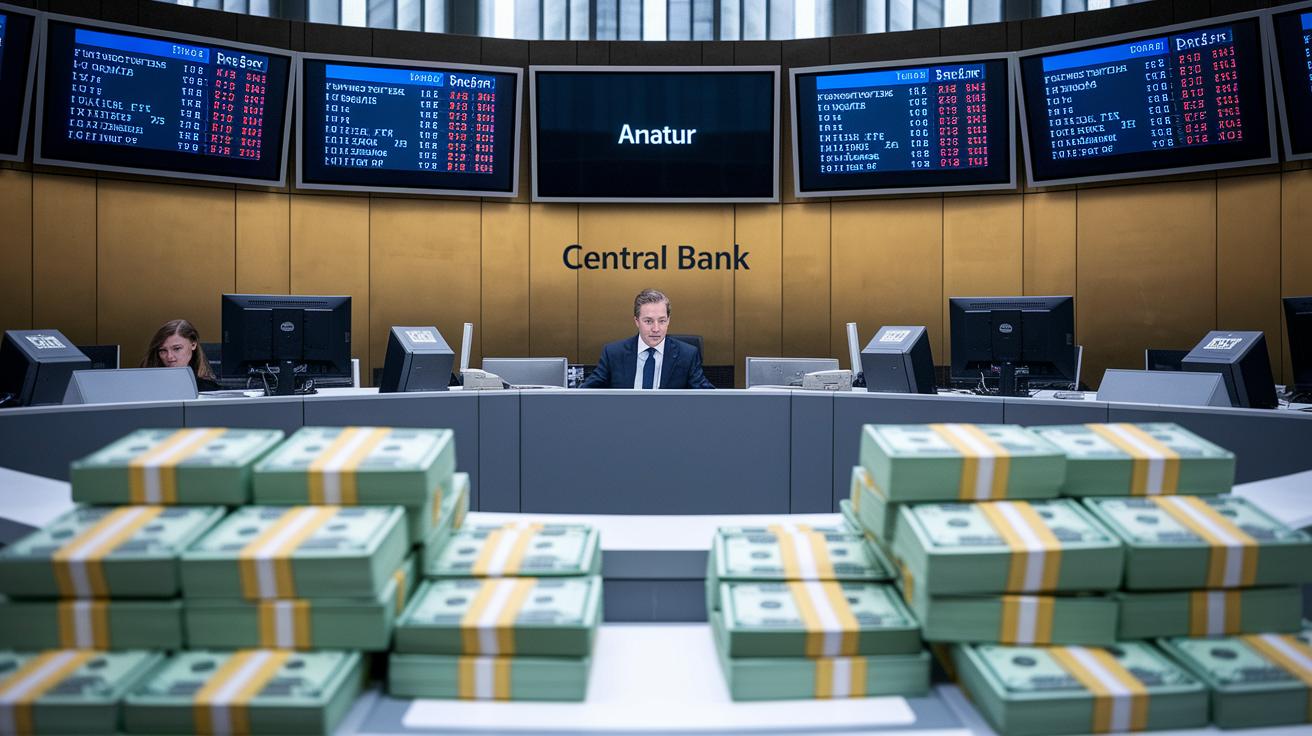
Central banks have a few main tools that help keep the market steady and the economy on track. They change key interest rates to make borrowing easier or tougher and buy or sell government bonds to adjust the money available in the market. This means loans might become easier or harder to get, and the prices of things like houses or stocks can go up or down. For instance, when interest rates drop, people and businesses often borrow more, which can lead to more spending and investment.
Sometimes, these banks use something called quantitative easing. Think of it as adding extra water to a drying plant by buying a large amount of assets, which helps ease financial stress. Another method is forward guidance, where central banks give clues about what they plan to do next. This helps investors and consumers set their expectations. All these tools work together to balance how much credit is available, the prices of assets, and the level of inflation. For more detailed insights on these effects, check out the global financial impact reviews.
| Tool | Mechanism | Market Effect |
|---|---|---|
| Interest Rate Adjustments | Changes the cost of borrowing by modifying key rates. | Influences how easily people can get credit and affects asset prices. Lower rates generally encourage spending. |
| Open Market Operations | Buys or sells government bonds to change the money supply. | Impacts the amount of cash in the economy and helps guide inflation trends, which in turn affects investment feelings. |
| Quantitative Easing | Pushes more funds into banks by purchasing lots of assets. | Helps boost market liquidity and supports stable asset prices by easing financial stress. |
| Forward Guidance | Shares hints about future policy moves with the public. | Helps ease uncertainty by shaping what investors and consumers expect regarding long-term trends. |
Together, these tools form a strong process that supports our financial systems. By carefully managing borrowing costs, market liquidity, and how confident people feel about the future, central banks work to keep things stable, even when the future seems uncertain. Their clear hints and smart asset operations help create a market environment that can adapt and grow while keeping risks in check.
Regulatory Oversight for Global Market Stability
Central banks take careful steps to guard our financial system from unexpected shocks. They require banks to keep a certain amount of money in reserve, which means banks must hold enough funds to cover sudden losses. They also run regular stress tests that mimic tough economic times to see if banks can handle rough conditions. For example, countercyclical capital buffers encourage banks to save extra money during good times, so they are better equipped when the economy slows. This way, they lower the risk of bank failures and keep depositors safe.
In addition, central banks closely watch how banks handle money transfers and other operations to make sure every transaction is secure. They check that banks are following established rules, so any small trouble signs can be spotted early. By reviewing the amount of money banks keep in reserve, central banks work hard to prevent problems at one bank from affecting the whole system. These oversight steps help build trust in our banking system, making markets steadier and ensuring that banks operate in a safe and predictable way.
Crisis Response and Lender of Last Resort in Market Stability

2008 Financial Crisis Response
During the 2008 crisis, central banks acted quickly to stop a deep financial downturn. They bought government bonds to put extra cash into the system, much like giving water to a dry garden to help plants grow. Banks also set up swap lines, which let them exchange currencies quickly, imagine friends sharing ingredients when one runs out. With over $620 billion in emergency funds, these steps helped banks handle sudden cash shortages and prevented bank runs.
COVID-19 Pandemic Measures
When the pandemic hit, central banks once again became the crucial safety net. The Federal Reserve spent about $2.3 trillion on asset purchases, which was like providing life-saving water to a wilting plant. Along with that, special facilities ensured banks had enough cash on hand. Central banks even joined forces with groups like the ECB, BOJ, and SNB to help smooth out international credit flows. These combined efforts rebuilt trust, eased uncertainty, and kept banks running during one of the toughest times in recent history.
International Coordination in Central Bank Market Interventions
Central banks everywhere join forces to keep currency markets steady when big changes put trade and investment at risk. They use tools like swap lines; for instance, the Fed and the Swiss National Bank set up an arrangement in 2020 to exchange currencies quickly when cash was low. They also share insights during international meetings, such as IMF forums, to ensure that no country suddenly sees its currency drop or spike in value.
By pooling their huge currency reserves, about $12.5 trillion in all, these banks help smooth out wild market swings. This teamwork means that if one nation faces stress in its currency market, other central banks can quickly step in to help balance things out. Aligning strategies and timing their moves, they work together to prevent disruptive currency changes that could hurt both trade and the flow of money.
In short, this coordinated approach reassures everyone that central banks are on the watch and ready to act when needed, keeping markets stable and boosting confidence.
Future Challenges for Central Banks in Global Market Stability

Central banks are now dealing with big changes as digital money, new tech tools, and more stablecoins enter the scene. Digital money projects, like central bank digital currencies (CBDCs), force us to rethink old rules. You can think of it like tweaking a familiar recipe, small adjustments lead to a new outcome. By updating these rules, central banks intend to keep markets safe and promote a solid, modern financial system.
Staying open and independent is just as important. Clear, honest guidance helps investors feel secure even when the market shifts quickly. And as digital innovations grow, banks need to explain their future policies in simple terms. This straightforward approach will protect financial trust while supporting steady, sustainable growth, ensuring that everyone feels a bit more secure in a fast-changing world.
Final Words
In the action, the post unraveled central banks’ core functions, ranging from monetary policy tools to crisis response measures. It explained how these institutions steer interest rate adjustments and deploy emergency liquidity while supervising market risks. The discussion also touched on international coordination and future challenges, all geared toward maintaining stability. With the sturdy role of central banks in global market stability, there's a clear path to more confident discussions and smarter investment moves ahead. Let's stay positive and keep learning as market dynamics evolve.
FAQ
What is the role of central banks in global market stability?
The role of central banks in global market stability involves managing the money supply, setting benchmark interest rates, issuing currency, and supervising commercial banks to mitigate risks and maintain steady economic conditions.
How do central banks contribute to economic stability?
The role of central banks in economic stability includes using monetary policy tools such as interest rate adjustments, open market operations, and forward guidance to moderate inflation and smooth out market fluctuations.
What are the main functions of a central bank?
The central bank performs functions like controlling the money supply, setting interest rates, issuing currency, overseeing bank compliance, regulating liquidity, and providing emergency funding to support overall financial stability.
How do central banks stabilize foreign exchange markets?
The role of central banks in stabilizing foreign exchange markets is seen through interventions like bilateral swap lines and coordinated currency moves, which reduce sudden value swings and support steady trade and investments.
How do central banks maintain price stability?
The central bank maintains price stability by adjusting interest rates and using monetary policy measures to control inflation, keeping consumer prices predictable and supporting a balanced economic environment.
